63. Farm-scale Natural Capital Accounting: Unlocking the potential of natural capital to support sustainable agriculture

63. Farm-scale Natural Capital Accounting: Unlocking the potential of natural capital to support sustainable agriculture

Article February 25th, 2026
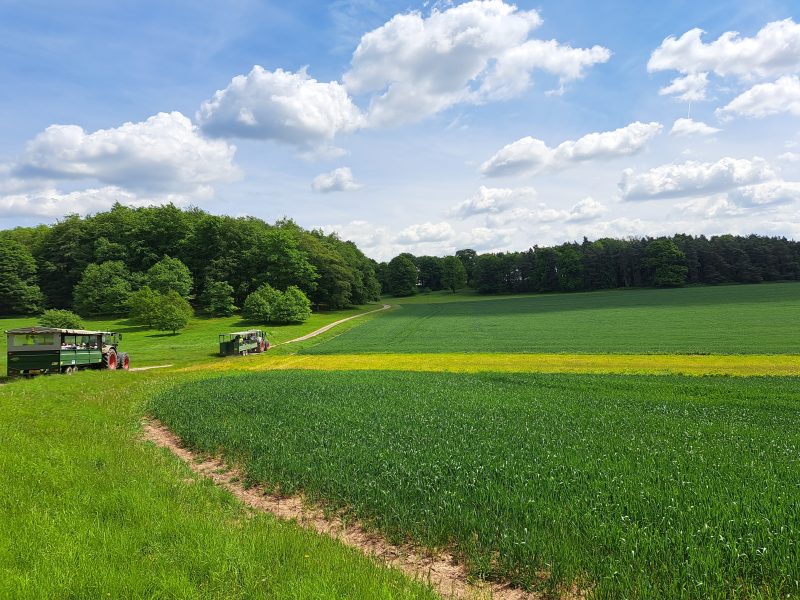
Our approach integrates farm operational and production data, remote sensed imagery and data, ecological modelling and state and transition models to generate accounts that contain verifiable information about the extent and condition of natural capital assets, indicators of the ability of these assets to generate a range of intermediate and final ecosystem services (e.g. habitat maintenance for biodiversity, forage for livestock, carbon sequestration, pollination, soil regulation, shade and shelter) and environmental performance at the farm scale.
Read more

62. Navigating the Renters’ Rights Act: What Rural Landlords and Tenants Need to Know

62. Navigating the Renters’ Rights Act: What Rural Landlords and Tenants Need to Know

Article February 25th, 2026
The Renters’ Right Act 2025 (“the Act”) represents one of the most significant reforms to residential letting law in recent decades. Although much of the public conversation focuses on the urban rental market, the Act will have important implications for farmers, estate owners, advisers and rural businesses who let cottages, farmhouses, or tied accommodation. This article provides an overview of the key changes and explores how they may affect occupancy arrangements within the rural economy.
Read more
61. Productivity of low-emission systems of pasture-based milk production

61. Productivity of low-emission systems of pasture-based milk production

Article February 25th, 2026
Minimizing the use of artificial fertilizer nitrogen (AFN) and optimizing conditions for biologically fixed nitrogen (BFN) in association with clover is a cost-effective strategy for lowering emissions from dairy farms. The objectives of the present study were to examine the productivity of clover-BFN-grassland for pasture and milk production, to quantify the BFN that underpinned this productivity, spring growth and the length of the growing season, nutritive value of pasture at different stages of the growing season and feed budgets.  
Read more
59. New evidence supports case for UK farm policy reset

59. New evidence supports case for UK farm policy reset

Article February 25th, 2026
Recent evidence from a major US-EU study concludes that innovation-led productivity growth has been the single most important factor limiting agricultural emissions globally, enabling more food to be produced with less environmental impact. Meanwhile, Defra’s National Security Assessment warns that biodiversity loss and ecosystem collapse threaten global food supplies, making UK reliance on imports increasingly risky. And research led by Professor Andrew Balmford of the University of Cambridge further shows that farm policies which reduce UK food production can displace environmental damage to more biodiverse regions overseas, worsening global biodiversity loss.
Read more
58. YEN Conference 2026 Sessions: Impacts of warm, dry and wet conditions on crop performance

58. YEN Conference 2026 Sessions: Impacts of warm, dry and wet conditions on crop performance

Article February 18th, 2026
We need a crop husbandry strategy that deals with the long-term climate trends for warmer conditions and the greater likelihood of very high temperatures, whilst also being resilient to seasonal challenges of long dry or wet periods. We do not know the weather conditions of the growing season before it happens, so we need to grow crops that are resilient to both dry and wet condition. A few key factors to get right include: maximising rooting depth, ensure sufficient N and P for canopy longevity and achieving well drained fields.
Read more
57. The challenges in transplanting large trees

57. The challenges in transplanting large trees

Article February 18th, 2026
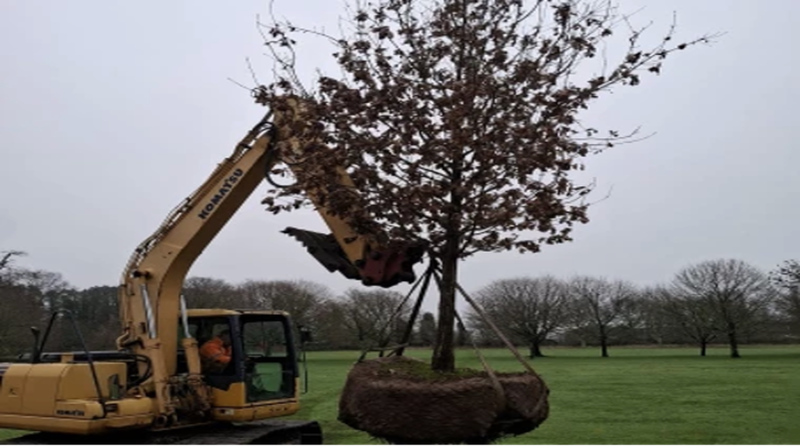
The transplanting of large trees is often seen as an acceptable compromise between development ambition and environmental responsibility. In practice, however, relocating established trees is one of the most complex and high-risk interventions in the built environment. Success is governed not by good intentions alone, but by biological limits, logistical realities, long lead times, significant cost and sustained aftercare. When any of these factors are underestimated or overlooked, failure is not just possible, it is likely, writes Aaron Morley at Ruskins, the tree transplanting and soil specialist
Read more
53. How to measure, report and verify soil carbon change

53. How to measure, report and verify soil carbon change

Article February 18th, 2026
Professor Pete Smith emphasised that soil carbon has the potential to act as a headline indicator of soil health, with strong links to productivity, resilience, ecosystem services, and broader sustainability goals. Yet this potential depends on robust, integrated, harmonised and credible MRV systems to track changes in soil carbon and meaningfully assess soil health. In this sense, soil carbon underpins soil health – but only careful measurement can unlock its full value.
Read more
52. Is cultivated meat sustainable? – Research pathways to cleaner “clean meat”

52. Is cultivated meat sustainable? – Research pathways to cleaner “clean meat”

Article February 18th, 2026
This work highlights that there are still many data gaps that exist around the environmental impacts of cultivated meat. Specifically, modelling of growth factor production at suitable scale for a cultivated meat industry, the impact of cell line production and storage, production of scaffold materials, and downstream processes after removal from bioreactors are required to accurately assess the impacts of cultivated meat production
Read more