
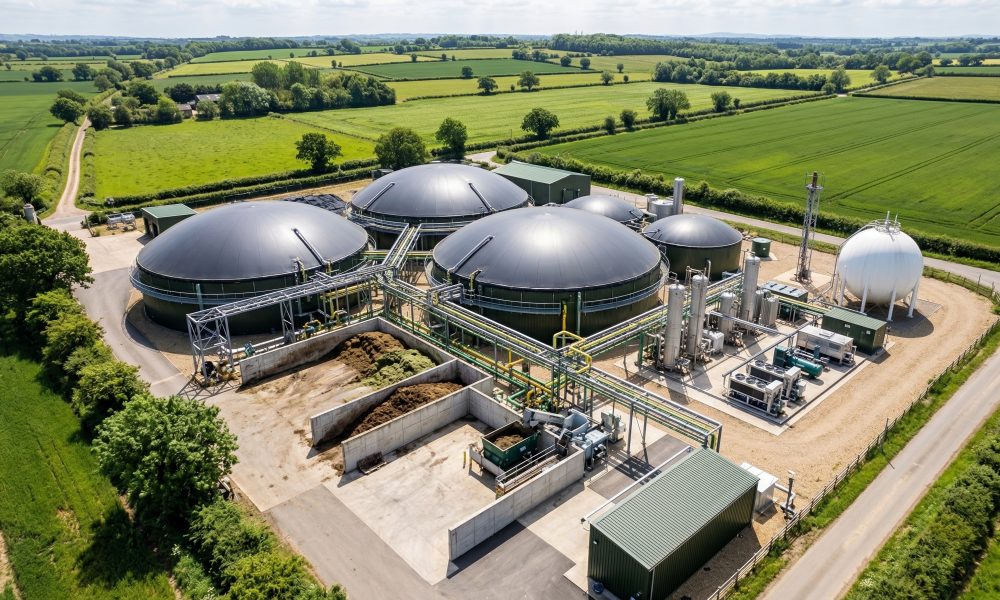
Scaling up AD remains challenging as biomethane is more expensive to produce than natural gas, with uncertainty over whether the best policy approach is to adopt a producer-focused, state-driven, circular economy model or a market-driven model focused solely on biomethane.
In 2022, 31% of total UK methane emissions (a greenhouse gas) arose from the waste sector (mostly from organic waste in landfill sites) and 48% from livestock and their manures. In anaerobic digestion (AD) plants, waste organic material is broken down by microbes into biogas and fertilisers, capturing this methane, which can then be used as a renewable fuel. Research evidence suggests AD has lower environmental impacts than disposal of organic wastes in landfill or by incineration.
A range of feedstock materials are used in AD including sewage sludge, agricultural waste, purpose-grown crops (such as maize) and food waste, which remains high in the UK (10.2 million tonnes annually).