
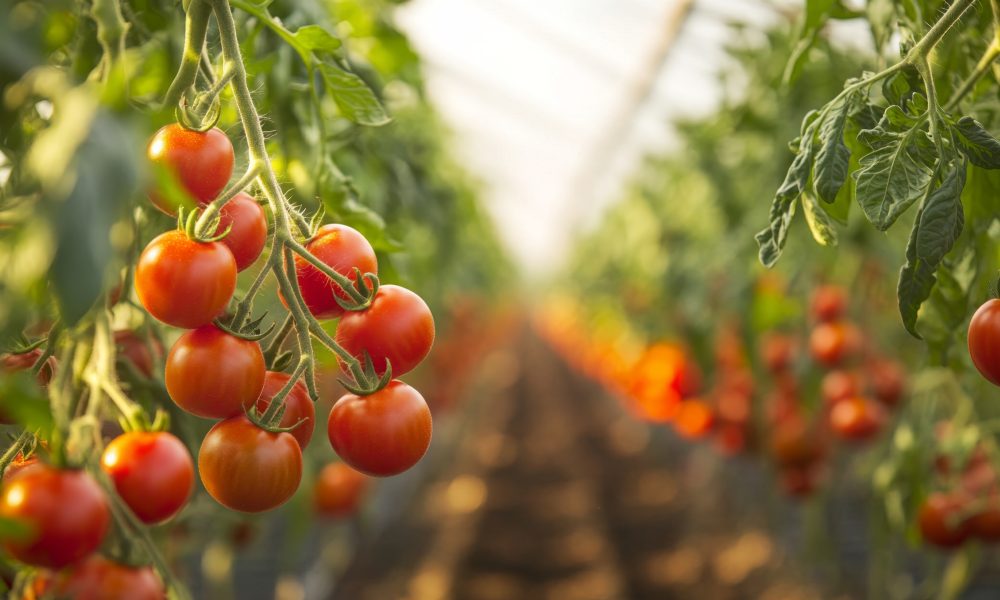
Lower fertiliser rates reduced aphid pressure in greenhouse tomatoes while maintaining yields, suggesting nutrient management could support biological control.
Cutting fertiliser use could suppress crop pests without reducing yields, according to research that suggests lower-input systems could support integrated pest management (IPM) strategies.
Researchers in France found that cutting fertiliser rates by half cut early aphid populations in greenhouse tomatoes by about 50%, while maintaining fruit yields.
The study, published in Insect Science, examined how different fertiliser approaches impacted interactions between tomato plants, potato aphids and two common-used biological control agents.
Scientists from INRAE, Universite Cote d’Azur, and collaborating institutions compared conventional high fertilization with a medium-rate programme equivalent to about half the nutrient concentration typically applied to greenhouse tomatoes.
Plants were grown under controlled greenhouse conditions and infested with potato aphids (Macrosiphum euphorbiae), before researchers introduced a parasitoid wasp (Aphidius ervi) or the two-spotted ladybird Adalia bipunctata to asses how biological control performance changed under different nutrient programmes.