
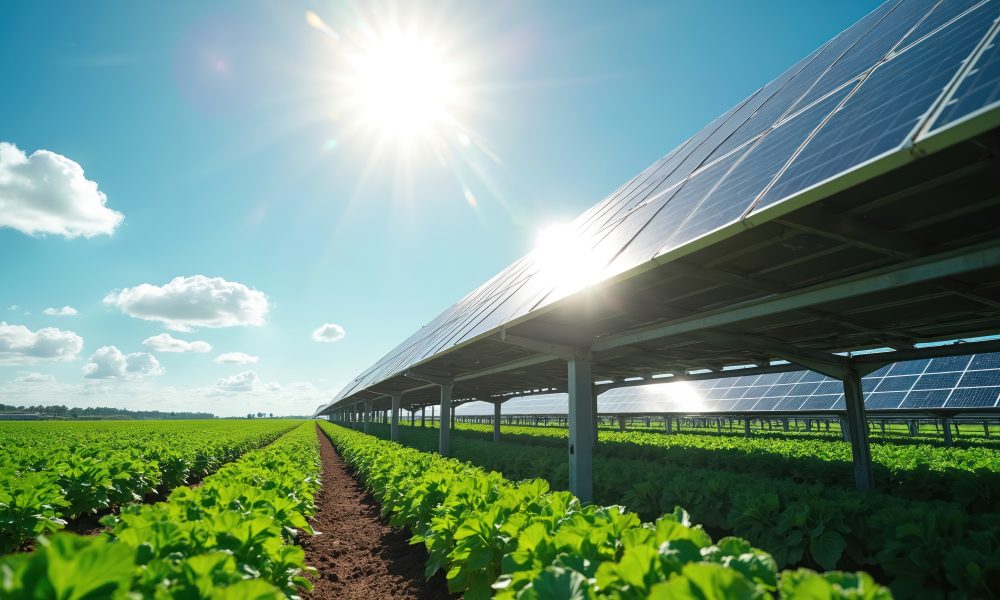
How we generate, store and use energy has always affected land. Now renewables are bringing energy back closer to home, and along with it, new opportunities for positive land use change.
Over time, the relationship between humans, land use and energy has shifted from localised usage guided by the threat of scarcity and overexploitation to a globalised system in which resource extraction is often displaced from the end user. The Industrial Revolution supercharged our energy use, mechanising industry and agriculture. With economic growth a central focus, coal mines were opened across the UK, field sizes were maximised, and machinery and industrial fertilisers used to increase yields. This has forged a close link between energy prices and the cost of food production, with agriculture remaining heavily reliant on fossil fuel usage.
Outside of mining communities and petroleum ports, for much of the last half-century in this country, energy was something that happened elsewhere: generated in distant power stations, extracted from far-off resources and delivered to consumers with no connection to the places that produced it. Renewable energy is changing that, with wind, solar and storage projects bringing energy infrastructure back into our landscapes. Renewables have generated over 50% of the UK’s electricity for a second consecutive year. We have over 9,000 onshore wind turbines and just under 3,000 offshore wind turbines, and as of September 2024, ground-mounted solar PV panels covered an estimated 21,000 hectares, roughly 0.1% of the total land area of the UK.