
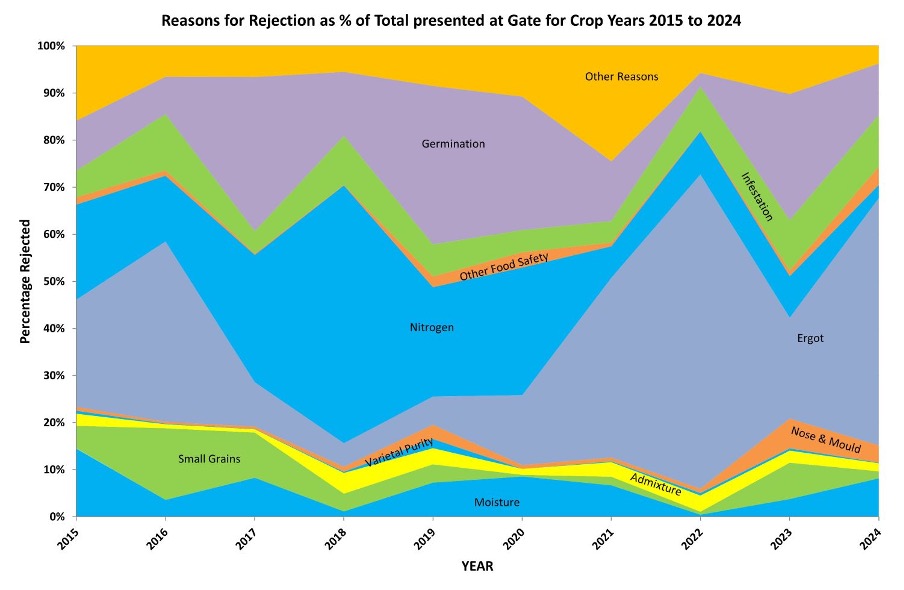
In 2024, arable farmers across the UK saw a huge increase in ergot in cereal crops and felt the financial impact through grain rejections and the loss of premium prices for their hard-earned harvests. The reasons were hardly a mystery. Difficult drilling conditions in autumn 2023, followed by a warm, wet spring and a cool, rainy summer, created ideal conditions for the fungus to germinate and spread. Thanks to a return to drier weather, ergot levels fell again in 2025, but the disease still poses a real risk to farmers’ bottom lines.
Legal limits for ergot in grain are extremely low – just 0.5 g per kilogram is permitted – and this strict threshold meant ergot was the leading cause of malting barley rejections in three out of the last five years, according to MAGB. When grain is rejected, farmers lose access to premium markets and may also face additional costs for testing, sorting and cleaning grain. While weather is a key driver, attention is now turning to whether some farming practices might be affecting the risk of ergot and other fungal diseases.