
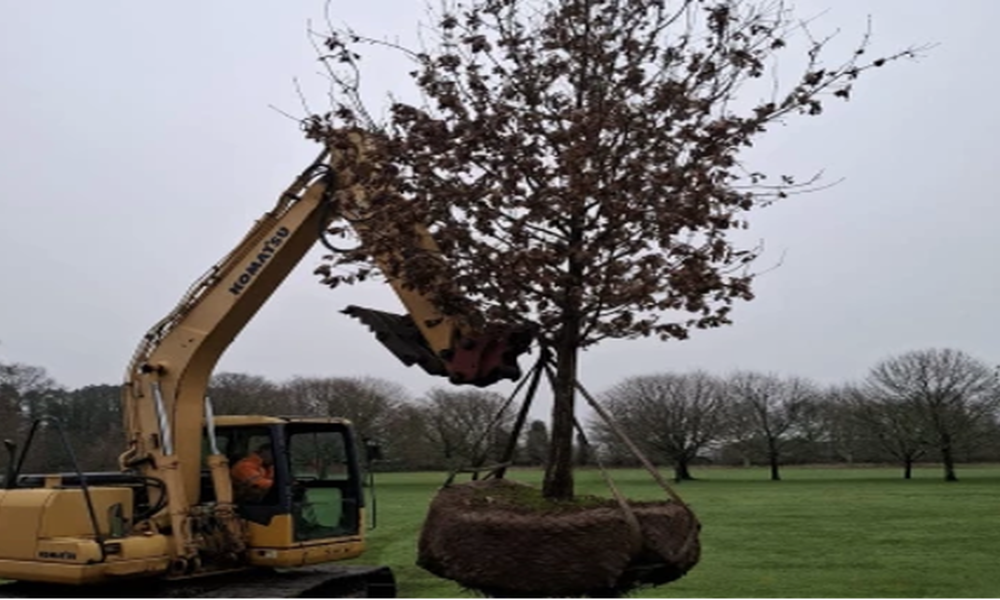
The transplanting of large trees is often seen as an acceptable compromise between development ambition and environmental responsibility. In practice, however, relocating established trees is one of the most complex and high-risk interventions in the built environment. Success is governed not by good intentions alone, but by biological limits, logistical realities, long lead times, significant cost and sustained aftercare. When any of these factors are underestimated or overlooked, failure is not just possible, it is likely, writes Aaron Morley at Ruskins, the tree transplanting and soil specialists
Understanding the challenges involved is essential for anyone considering tree transplantation as part of a development or landscape strategy. Large trees are living systems, not interchangeable assets and success depends as much on planning and patience as it does on execution.
One of the most significant constraints in transplanting large trees is timing. Tree movement is governed by biological cycles, not construction programmes. The optimal season for transplanting in the UK runs from October through to March, when trees are dormant and their water demand is low. Attempting to move trees outside this window dramatically increases stress and mortality risk. Trees that are able to be transplanted with Tree Spades can be relatively easily transplanted using specialist machines during these months.