
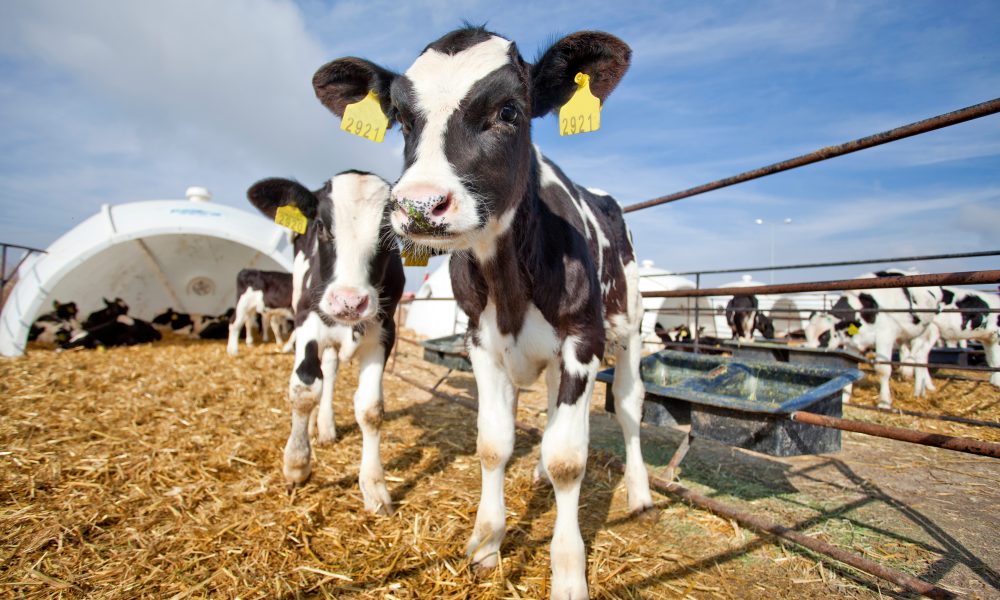
Short lying bouts, incomplete bouts, and memory were tested as pain indicators. Band and surgical castration were used as pain sources. Total lying bouts did not differ between castration methods.
Few methods are available to assess pain during healing, and none are specific for pain following castration in calves. This study aimed to assess changes in lying behavior and memory as indicators of pain in the days and weeks after castration.
Based on previous studies, we predicted that an increase in the number of short-duration lying bouts and incomplete lying bouts (bending front legs but hindquarters remain elevated) can serve as an indicator of evoked pain (i.e., associated with pressure on the wound), and that deficits in reference memory can serve as an indicator of cognitive load associated with lasting pain.
Forty 14-day-old male calves (24 Holstein; 16 Holstein × Angus crossbred) were pseudo-randomly assigned to one of four treatments based upon a 2 × 2 factorial design, considering castration method (band vs surgical castration), with or without supplementary week-long meloxicam treatment.
At castration, all calves were provided multimodal analgesia, including sedation, a local block, and ketoprofen; calves in meloxicam treatment received this drug for additional pain control every other day during the 1st and 4th weeks following castration (when pain is thought to peak).
Lying behavior was recorded using accelerometers from 4 to 42 days of age. Calf memory was tested daily using a modified hole-board test in weeks 1 and 4 following castration.
On the second day after castration, calves in all treatments engaged in more short-duration lying bouts compared to the day after castration (6.38 ± 0.54 vs 3.50 ± 0.54 bouts/day), suggesting that the multimodal analgesia provided was insufficient to fully alleviate pain on the second day after castration.
Band-castrated calves exhibited a greater number of short-duration lying bouts on the second day following castration compared to surgically castrated calves (7.64 ± 0.79 vs 5.13 ± 0.74 bouts/day), indicative of more pain. We found limited effects of castration method and additional meloxicam administration on behaviors during the 4th week after castration, and we found no effect of either treatment on measures of calf memory.
Our work provides the first evidence that an increased number of short lying bouts can serve as an indicator of pain in young calves in the days after castration.
Animal Journal