
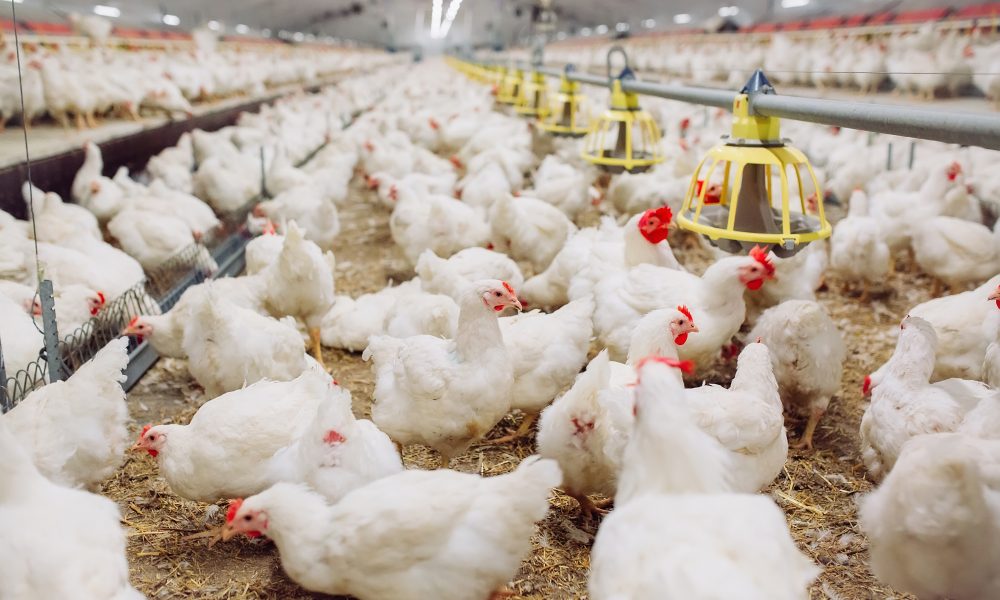
We highlight both opportunities and challenges, offering practical insights and a critical perspective to guide future research and application in broiler health monitoring.
Introduction
Volatile organic compounds (VOCs) have recently gained attention as a novel monitoring tool in broiler production. These small organic molecules with a high vapor pressure at ambient temperature and standard atmospheric pressure can evaporate easily and disperse over long distances in both gas and liquid phases (Dell’Olio et al., 2024; Epping & Koch, 2023). They can be emitted by the birds themselves (Hankel et al., 2022) as well as external sources such as feed (Recharla et al., 2017), manure (Ranadheera et al., 2017), and the surrounding environment (Huanhong et al., 2023). Within poultry barns, VOCs exist in the ambient air and can vary significantly based on diet (David et al., 2014), infections (Hankel et al., 2022), and environmental conditions (Liao et al., 2001). These variations make VOCs promising biomarkers for assessing animal health, welfare, air quality, and overall production efficiency, though further research and validation are needed for routine application. This chapter focuses on organic volatiles, while also considering certain inorganic volatiles, such as ammonia or hydrogen sulfide, due to their relevance in the broiler industry.