
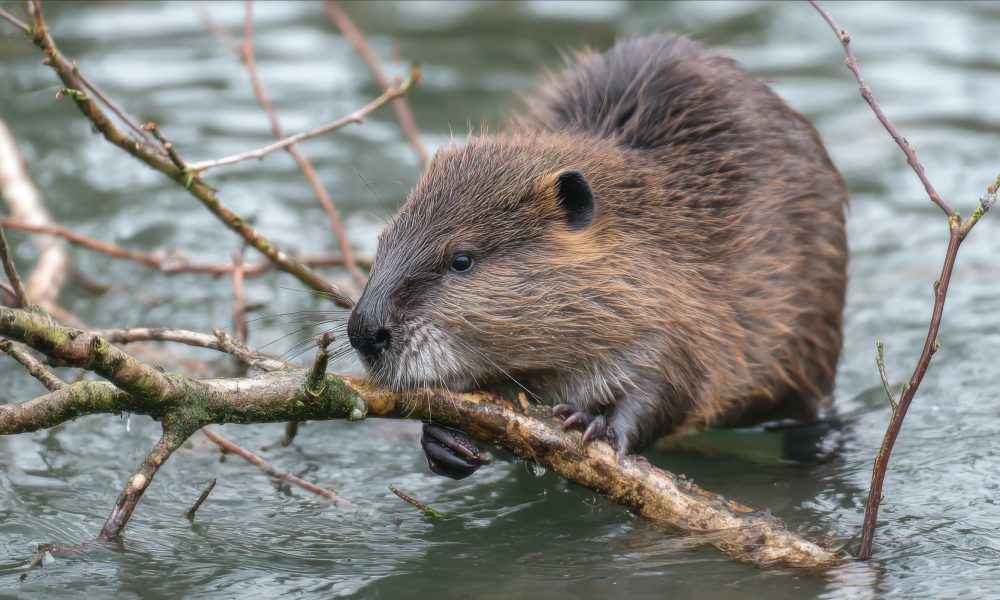
Attention is turning to solutions that can help stabilise water availability across the farmed landscape. One such solution that is increasingly visible across Scotland is the Eurasian beaver.
Heatwaves, drought and water scarcity are no longer occasional challenges for arable farmers: they are becoming defining features of the growing season. The UK has already experienced multiple heatwaves in 2026, with drought conditions affecting large areas and wildfires reported across Scotland and Europe. For growers, the implications are clear: reduced yields, tighter margins, and increasing pressure to build resilience into farming systems. Against this backdrop, attention is turning to solutions that can help stabilise water availability across the farmed landscape. One such solution that is increasingly visible across Scotland is the Eurasian beaver.
Beavers are often described as ‘ecosystem engineers’ because of their ability to rapidly modify local hydrology through dam building and wetland creation. Evidence from Scotland and wider Europe shows that beaver dams increase in-stream water storage, raise groundwater levels, and extend water residence time. In practical terms, this means more water is retained within the landscape for longer periods. During dry spells, this stored water can help sustain base flows in rivers and burns and soil moisture, reducing the severity of drought conditions for water users and adjacent landholdings.