
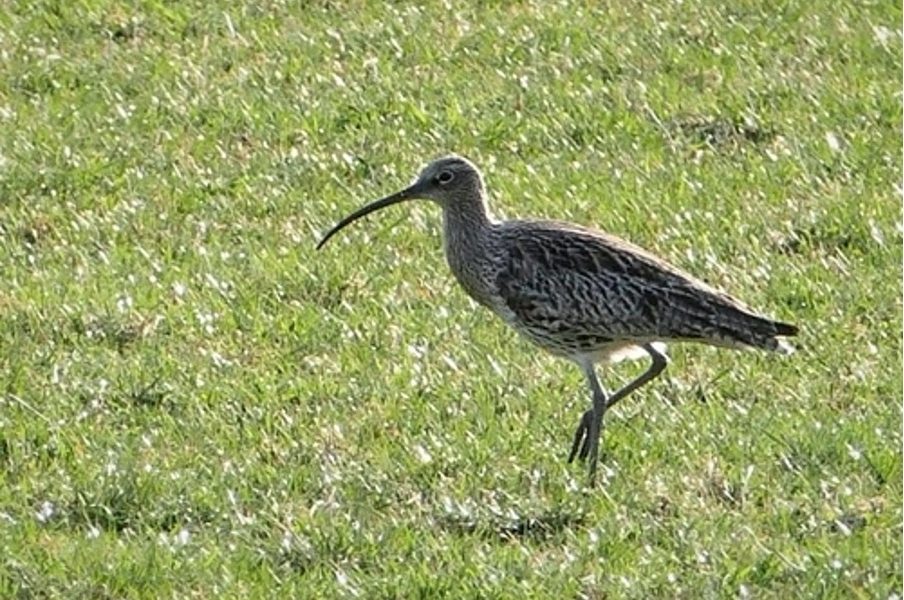
The haunting call of the curlew is one of the most evocative sounds of the British countryside. Yet behind that wild, bubbling song lies a species fighting for survival. With the Eurasian Curlew now one of the UK’s highest conservation priorities, understanding its life cycle is essential to understanding how, and why, we must act to protect it.
Curlews are long-lived birds, often surviving for 20-30 years, but they are also slow to reproduce, typically successfully raising very few chicks over a lifetime. This means populations depend heavily on adults surviving for many years, and require at least occasionally successful breeding seasons. GWCT researchers are working with communities and land managers across England, Scotland and Wales at almost every stage of the curlews life that we can reach to help save this iconic species.
Recently, a curlew tagged by our researcher Elli Rivers was officially recognised as the oldest living curlew on record, at nearly 34 years old. While this is an extraordinary achievement, it also highlights a troubling reality. Curlew populations in the UK are ageing. Their long lifespan masks the speed of decline, making population losses less immediately visible. Without sufficient recruitment of young birds, this iconic species may be far closer to the brink of collapse than we realise.