
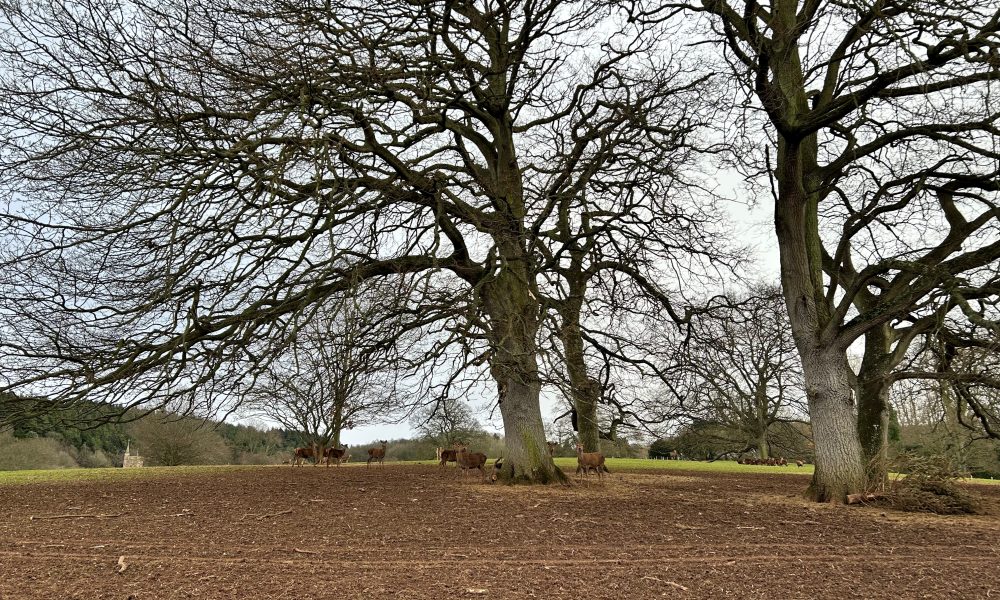
With limited research on farmed red deer especially at housing, and the lack of commercial deer farming outside of the UK and New Zealand, there was a need to look at deer farming systems, other livestock systems and non-farmed species to draw conclusions to better manage a semi domesticated species.
Red deer (Cervus elaphus) have only been farmed as recognised today since the 1970s (Cordery et al., 1989). Commencing in the United Kingdom (UK) and in New Zealand at around the same time (Fletcher, 1994), New Zealand is now widely regarded as the industry leader. In 50 years of deer farming, limited genetic selection for productivity and domestication has resulted in a semi-domesticated species. Deer within a farming system may only be a few generations away from their wild relatives (Asher et al., 1996) compared to other farmed livestock which has been farmed for hundreds of years. Farmed deer, therefore, are essentially wild animals habituated to the farm environment. Deer still act, behave and cycle as their wild relatives do. This clearly contrasts dramatically with farmed ungulates such as sheep, goats and cattle, which have undergone profound physiological, morphological and behavioural changes over a long time of domestication (Asher et al., 1996). This presents farming deer intensively with many challenges of managing wild natural behaviours inside a domesticated farming system. Red deer are free roaming grazing/browsing, social animals by nature preferring family groups that are hierarchal in structure (Clutton-Brock et al., 1983).
Over the past five decades, deer have been kept in confinement, but they have only experienced minimal genetic selection aimed at increasing productivity and domestication, making them semi-domesticated.